


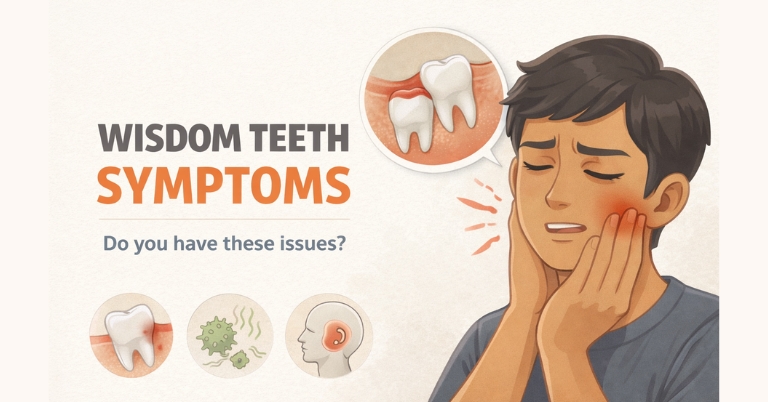
Wisdom teeth are the last set of molars that usually appear between the ages of 17 and 25. In many people, these teeth do not grow properly due to lack of space in the jaw. This can lead to pain, infection, and other dental problems. If you are wondering whether your discomfort is related to wisdom teeth, here are the most common symptoms to look out for.
One of the first signs of wisdom teeth problems is pain at the back of your mouth. This pain may start as mild discomfort and gradually become severe. You may feel it while chewing food or even while opening your mouth. The pain can sometimes spread to the ear, jaw, or head.
If your wisdom tooth is partially erupted, food particles and bacteria can get trapped around it. This often causes swelling, redness, and tenderness in the gums. You may also notice bleeding while brushing near that area. Swollen gums are a strong indication that something is not right.
Many people with wisdom teeth issues experience stiffness in the jaw. You may find it difficult or painful to open your mouth fully. This condition is common when there is inflammation or infection around the tooth.
When food gets stuck around a partially grown wisdom tooth, it becomes difficult to clean properly. This can lead to bacterial growth, causing bad breath and a bad taste in the mouth. Even after brushing, the smell may not go away easily.
In some cases, infection around the wisdom tooth can cause visible swelling in the cheek or jaw area. The area may feel warm and painful to touch. If ignored, the infection can spread and become serious.
Since wisdom teeth are located at the far end of the jaw, the pain can sometimes radiate to nearby areas. You may experience headaches or ear pain without realising that the root cause is your wisdom tooth.
When there is not enough space in the mouth, wisdom teeth can push against nearby teeth. This may lead to crowding or shifting of teeth, especially if you have undergone orthodontic treatment earlier.
If you notice any of these symptoms, it is better to consult a dentist immediately. Early diagnosis through a dental examination or X ray can prevent complications. In many cases, the dentist may suggest wisdom tooth removal to avoid further pain and infection.
Ignoring wisdom teeth issues can lead to severe infection and damage to nearby teeth. If you are experiencing persistent pain or swelling, do not delay treatment. Timely care can save you from unnecessary discomfort and bigger dental problems.
Copyright © 2026. All Rights Reserved




Leave a Reply